 XinYue Spraying Equipment
For growing metal fabricators, job shops, and original equipment manufacturers (OEMs), choosing between a manual batch booth and an automatic powder coating line is a pivotal business decision.
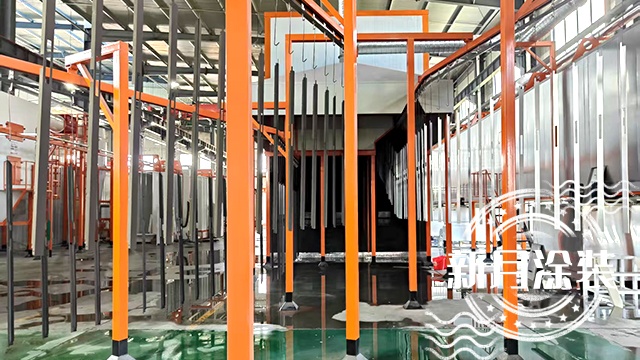
While manual powder coating systems offer lower initial capital expenditure (CapEx), rapidly increasing labor overhead, high powder waste, and inconsistent coat thickness often limit growth. Conversely, an automated finishing system optimizes material usage and throughput, but requires careful evaluation of production volume and payback period.
This guide provides an in-depth operational and financial comparison to help engineering directors and plant managers determine the right time to transition to an automated setup.
1. Feature Comparison: Manual vs. Automatic Systems
Understanding the core operational differences is essential for evaluating long-term operational expenditure (OpEx).
| Operational Metric | Manual Powder Coating System | Automatic Powder Coating Line |
| Primary Target Volume | Low volume, high mix / custom shapes | Medium-to-high volume, continuous production |
| Coating Consistency | Dependent on operator skill and fatigue | Controlled via PLC recipe and automated guns |
| Powder Recovery Efficiency | Typically 50%–60% (High overspray waste) | Up to 98% (With big cyclone & recovery system) |
| Line Speed | Variable, batch-reliant | Continuous, fully controllable conveyor speed |
| Labor Requirement | High (2–6 manual sprayers per shift) | Low (1–2 operators for loading/monitoring) |
| Color Change Downtime | 15–30 minutes (Standard batch booth) | 10–15 minutes (Fast-color-change plastic booth) |
2. 4 Key Signals It Is Time to Upgrade
If your plant experiences any of the following operational bottlenecks, upgrading to a continuous automatic powder coating line will yield immediate financial and productivity advantages.
+-------------------------------------------------------------------------+
|                  4 SIGNALS TO UPGRADE TO AUTOMATION                     |
+-------------------------------------------------------------------------+
|  1. Rising Labor      |  2. Uncontrolled      |  3. Excessive Film     |
|     Costs & Turnover  |     Quality Bottleneck|     Thickness Variations|
|-----------------------+-----------------------+-------------------------|
|  4. High Powder Waste |  5. Customer Quality  |  6. Capacity Ceiling    |
|     and Overspray     |     Rejection Rates   |     Reached             |
+-------------------------------------------------------------------------+
Signal 1: Labor Costs and Turnover Strain Your Margins
Manual powder coating is physically demanding. Spray operators face fatigue, leading to inconsistent application over an 8-hour shift. If high turnover, rising local hourly wages, or a shortage of skilled painters affect your facility, automation replaces manual labor dependency with repeatable PLC-controlled precision.
Signal 2: High Powder Waste Is Hurting Profitability
In a manual spray booth without a recovery circuit, overspray goes directly into exhaust filters and cannot be reused. Because powder paint represents a major recurring cost, a 30%–40% waste rate erodes profit margins. Automated lines with integrated cyclone recovery systems collect up to 98% of overspray, recycling it continuously back into the feed hopper.
Signal 3: Inconsistent Film Thickness (Over-Coating)
Manual sprayers tend to over-coat workpieces to avoid thin spots or bare metal rejections. Applying 100 microns when the specification requires only 60 microns wastes 40% more powder than necessary. An automatic powder coating line utilizes reciprocal gun movers and optical sensors to maintain exact micron tolerances across all surfaces.
Signal 4: Output Cannot Keep Pace with Stamping or Fabrication
If your welding, stamping, or laser cutting departments are producing faster than your paint shop can process, your finishing department becomes a plant-wide bottleneck. Upgrading to a continuous conveyorized line enables continuous loading, inline pretreatment, automated coating, and inline curing without stopping.
3. Financial Analysis: Breaking Down the Return on Investment (ROI)
To evaluate the transition, consider a typical medium-sized metal component plant processing 150,000 m² of surface area annually.
ANNUAL OPERATIONAL COST BREAKDOWN
-------------------------------------------------------------------
Manual Setup:     [========== Labor ==========][===== Powder Waste =====]
Automatic Line:   [=== Labor ===][Powder Savings] -> ROI in 12-16 Months
-------------------------------------------------------------------
The Cost Comparison Scenario
- Labor Savings:
- Manual: Requires 4 manual sprayers across 2 shifts = ~$160,000/year (varies by region).
- Automatic: Requires 1 monitoring technician + loader = ~$50,000/year.
- Annual Labor Savings: $110,000
- Powder Material Savings:
- Manual: 35% overspray loss on $60,000 worth of annual powder purchase = $21,000 wasted.
- Automatic (Cyclone Recovery): Waste reduced under 5% = $3,000 wasted.
- Annual Material Savings: $18,000
- Rework and Scrap Reduction:
- Automated thickness control reduces coat defect rejections from 8% down to under 1%, saving an estimated $15,000–$25,000 annually in stripped parts and re-masking labor.
Total Annual Savings: ~$143,000 – $153,000
Estimated Capital Cost for Automatic Line: ~$180,000 – $220,000
Payback Period: 14 to 18 Months
4. When You Should KEEP a Manual Line
Automation is not the answer for every factory. Maintaining a manual or semi-automatic batch system is preferable if:
- Extremely Low Volume: You coat fewer than 50–100 mixed parts per day.
- Extreme Geometrical Variety: You handle massive, structural steel beams alongside tiny screws without standardized conveyor hooks.
- Frequent Small-Batch Color Changes: You switch between 15–20 different custom powder colors daily, running only 5–10 parts per color.
5. Transitioning Strategy: How to Upgrade Smoothly
If you are ready to move to an automated setup, follow this implementation roadmap:
- Audit Your Parts Portfolio: Identify your top 80% volume parts by dimension, weight, and material type. Design the line’s window size and conveyor hook weight capacity around these dimensions.
- Select the Right Pretreatment: Match spray wash stages (3-stage vs. 5-stage) to your salt spray hour requirements (e.g., 500 hrs vs. 1000 hrs ASTM B117).
- Plan Factory Footprint & Utilities: Ensure your facility has adequate ceiling clearance for overhead turnarounds, along with required gas pipelines and high-amperage electrical service.
Upgrade Your Finishing Operations with Confidence
Transitioning from manual spray booths to a high-efficiency finishing system improves throughput, lowers cost per part, and ensures consistent quality.
Our engineering team specializes in custom turnkey installations tailored to your floor space and output targets.

WhatsApp
Scan the QR Code to start a WhatsApp chat with us.