 中国新悦
中国新悦
1. General Inspection Rules
⑴These requirements apply to surface appearance quality inspection of all electrostatic powder coated workpieces. Judgment is based on visual observation, hand feel and simple tool measurement.
⑵Inspection environment: Natural light or 40W standard white light. Observe from multiple angles with a viewing distance of 300~500mm from the workpiece surface.
⑶Inspection tools: Color difference card, coating thickness gauge, cross-cut tester, adhesive tape, straight ruler, 等.
⑷Inspection can only be conducted after workpieces cool down to room temperature with no dust, water stains or oil contaminants on the surface.
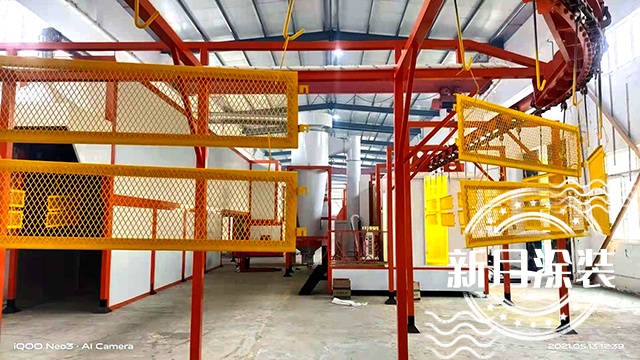
2. Basic Overall Appearance Requirements
⑴The coating shall be intact and uniform, fully covering all coated areas without substrate exposure, missing coating or insufficient powder coverage.
⑵The surface shall be flat and smooth, free of bulges, particles and rough burrs.
⑶The surface shall be clean without obvious stains, fingerprints, water marks and oil deposits.
⑷Powder coating shall be fully applied on corners, bends, weld seams, grooves and dead corners with no partial thin coating.
3. Color and Gloss Requirements
⑴Colors shall conform to standard samples and drawing color codes with no obvious color difference. Workpieces in the same batch shall have consistent hue without uneven shade and two-tone effect.
⑵Gloss shall meet order specifications including high gloss, matte and semi-matte. Uniform gloss is required on single workpiece with no partial bright or dark areas.
⑶Foreign color spots and patches are prohibited.
4. Appearance Defect Judgment Criteria
4.1 Unacceptable Defects (Directly Rejected)
⑴Substrate exposure, missing coating, large-area powder peeling and coating detachment;
⑵Obvious bubbles, pinholes, shrinkage cavities, cracks and sagging powder accumulation;
⑶Severe scratches, dents and sharp abrasions damaging the coating surface;
⑷Large-area pockmarks, orange peel texture and agglomerated particles;
⑸Rust and black oxide layers on coated surfaces;
⑹Accumulated caked powder and severe powder sagging.
4.2 Allowable Minor Defects (Judged by Product Grade)
⑴Tiny dust particles: Acceptable if small in quantity and size without affecting overall appearance;
⑵Shallow faint scratches: Permitted on non-critical surfaces if coating and base material remain intact;
⑶Slight corner wear: Allowed on inner fitting and hidden positions with no visual impact.
5. Requirements for Corners, Holes and Fitting Surfaces
⑴Coating thickness on sharp corners and edges shall be moderate, free of heavy powder burrs and edge chipping.
⑵Screw holes, mounting holes and through holes shall not be blocked by excess powder with neat openings to ensure normal assembly.
⑶Fitting surfaces and welds shall be fully coated without thick powder buildup causing assembly misalignment.
⑷No coating cracking or peeling on bent sections.
6. Sampling Inspection for Coating Performance
⑴Coating thickness: Controlled per product standard, normally ranging from 60~120μm. Even thickness distribution is required with no local ultra-thin or ultra-thick areas.
⑵Adhesion test: No massive coating peeling after cross-cut test; no powder flaking after tape pulling test.
⑶Friction resistance: No color fading or powder shedding under normal wiping.
7. Batch Judgment & Disposal
⑴Single workpiece with prohibited defects on key visible surfaces shall be deemed unqualified and sent for rework or scrapped.
⑵Full re-inspection and recoating shall be carried out for batches with prominent color difference and inconsistent coating quality.
⑶Workpieces with minor flaws that do not affect usage, appearance and anti-corrosion performance can be accepted as qualified products.

ワッツアップ
QR コードをスキャンして WhatsApp チャットを開始してください.