 XinYue Hiina
Amid the global wave of environmental protection, powder coating — a new type of solid coating with zero VOC emissions — is quietly replacing traditional solvent-based coatings. It is indispensable for applications ranging from pipeline anticorrosion to the mirror-smooth finish of refrigerator shells and automotive wheel hubs.
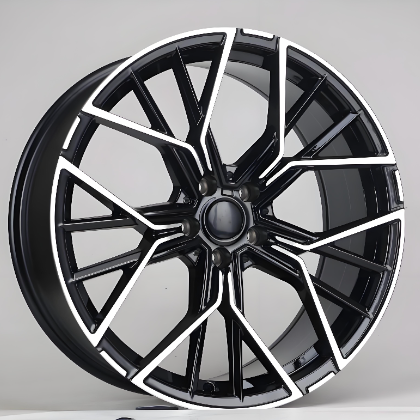
However, the coating thickness of conventional powder coatings ranges from 60 to 100 micrometers, far exceeding that of traditional liquid coatings at 10 to 40 micrometers. Thick coating not only causes resource waste but also tends to result in rough coating surfaces and reduced glossiness, greatly limiting its application in high-end fields.
Therefore, the thin-coating technology of powder coatings is highly necessary, and ultrafine powder coatings have attracted extensive attention. Among related research, particle size control of organic polymer powder has become the core key.
Powder Coatings: Why Make Them “Fine”?
Powder coatings are 100% solid powdery coatings taking organic resin binders and curing agents as film-forming substances, supplemented with fillers, pigments and functional additives. They are transferred onto substrates in powder form, then form a continuous film through baking, melting and curing.
In actual production and coating processes, to regulate coating thickness by controlling the particle size of powder coatings, organic polymer powders can be classified according to their median particle size (D50) or average particle size. They are categorized into conventional powder (D50>30 μm), fine powder (D50<30 μm) and ultrafine powder (D50<25 μm).
Compared with liquid coatings, the main problems urgently to be solved for powder coatings stem from thick-film drawbacks such as poor surface flatness and low gloss of the cured coating film. The key to realizing thin-film coating lies in refining the powder particles to a finer size.
Troubles of Fine Particles: The Dilemma of Flowability
Grinding powder into finer particles sounds simple, yet it hides a major technical challenge — poor flowability. Ultrafine powder features low single-particle mass and large specific surface area, which easily cause particle agglomeration and poor flowability, thereby deteriorating the spraying quality of powder coatings. To achieve powder ultrafine refinement, the core task is to improve the flowability and fluidization performance of ultrafine powders.
1. Influencing Factors of Flowability
(1) Particle Size Distribution
The fluidization performance of ultrafine powder coatings is significantly affected by particle size distribution. For ultrafine powder coatings, attention should be paid not only to the average particle size (D50), but also to narrowing the span of particle size distribution — namely reducing D90 and increasing D10 — which is critical to improving powder flowability and coating quality. A smaller distribution span leads to a more favorable particle packing state, delivering better flowability and coating performance.
(2) Particle Morphology
Most particles of ultrafine powder coatings are irregular lumpy or flaky, which are prone to adhesion and agglomeration, resulting in poor fluidization. The closer the particles are to a spherical shape, the smaller their specific surface area and the fewer contact points between particles. Such particles are less likely to agglomerate and can produce a smoother coating appearance.
2. Methods for Improving Flowability
One category relies on applying external forces to improve flowability via an external force field, defined as the external force field method. The other introduces additional large or fine particles as flow regulators without applying external forces, defined as the intrinsic method.
(1) External Force Field Method
By introducing external energy into the powder system, this method reduces particle agglomeration, effectively lowers powder viscosity, and enhances powder flowability. Commonly applied external forces include pressure, mechanical vibration, centrifugal force, magnetic field, acoustic field and so on. Although effective, such methods usually require complex equipment.
(2) Intrinsic Method
The intrinsic method is currently more mainstream and simpler to implement. A small amount of guest particles are added into the ultrafine powder as flow aids, which attach to the surface of host particles. Acting like tiny ball bearings or spacing pillars, they increase the inter-particle distance and reduce mutual attractive force, thereby significantly improving flowability.
Commonly used materials include nano-silica, nano-titanium dioxide, nano-alumina, etc. Nevertheless, commercial nano additives still have many drawbacks, such as poor compatibility with resin systems and a tendency to self-agglomerate.
A technological breakthrough in ultrafine powder coatings represents a microscale revolution toward refinement. Rather than merely serving as an environmentally friendly alternative, it redefines the performance limits of coatings through precise regulation in powder engineering. By optimizing particle size, particle size distribution, particle morphology, and synergistic effects with additives, it continuously sets new boundaries for coating comprehensive properties.

WhatsApp
Meiega WhatsAppi vestluse alustamiseks skannige QR-kood.